I Barely Dream
in Chinese
Rambling of My Queer Experience
with Movie Recommendations
It could be so tiring to ruminate about one’s 20s while in it. Pit Forest is a great place to let out some of my experiences and thoughts about the transnational identity development of myself as a queer kid, given that the primary readership of this publication is the upwardly mobile Chinese diaspora.
The earliest memories of me dabbling in the discussion of homosexuality were with my mom and big sister in junior high. I said something along the lines of “what if I bring home a boyfriend in the future,” to which my mom immediately turned stone-faced and said, “then don’t bother coming back”. My sister asked me when I was 12 why I always looked at or commented on boys when we used to watch movies every week. I do not remember what I responded with. The worse ones include being called sissy (“娘炮”) by my middle sister and hearing my college roommates casually using words like faggot (“变态”), though not on me. These snapshots made clear I would not find a safe place for my sexuality and femininity except for niche queer spaces in Southwestern China.
I became obsessed with English in high school—I needed to leave China and build a life somewhere else. Of the supposed “starter pack” for Chinese international students—money, academics, language, and supportive parents—I had only the last: parents who subscribed to the familiar discourse of “砸锅卖铁也要供”. In 2017, the application fees for master’s programs depleted my family’s annual rent, forcing our family of five into low-income housing for recently released inmates—an apartment my ex-con uncle kindly offered.
What remains of that last summer I spent in China was my dad coming back from his construction job, setting up a dinner table at the head of my bed, and my parents trying to borrow money from relatives at absurd interest rates, and a fight with my father while moralizing about one particular event in 198x that I will not name.
Until then, I chose to fold my desires inward in the culture I grew up in, and to drape myself instead in the contours of another—the English-speaking world I came to romanticize through media consumption. Untethered from any real intimacy with my Chinese identity, I found it pointless to cultivate romantic relationships or friendships with the uncertainties my sexuality could bring.
In the fall of 2017, I migrated from an obscure city in Inner Mongolia to New York City at twenty-one. When a Uruguayan-Brazilian classmate befriended me, I realized that he began to enroll me into his project of “Americanization.” He had grown up privileged—in looks, in money—and attended a preppy liberal arts college in the United States. But the struggles of immigration do not discriminate. The tone of our friendship was set by a mutual obsession with staying.
The lingering pull of a romanticized English-speaking world, now turbocharged by this momentum, carried me through several years of incessant exposure to films, museums, and hipster parties mediated in English. I spent nearly three years in NYC living with my “grandma,” a retired high school English teacher and guidance counselor. Many evenings, we sat over dinner reading The Economist, correcting my pronunciation, debating the nuances of words.
My fixation on pronunciation became almost obsessive. On my daily 40-kilometer bike rides—from West Harlem to Battery Park, across the Williamsburg Bridge to Greenpoint, over the Pulaski Bridge into Long Island City, across the Queensboro Bridge, through Central Park, and home—I would repeat syllables aloud through panting.
I am still astonished by how fully I have come to inhabit this language — having only begun at twenty-one — to speak about art and philosophy, make niche jokes, hold conversations in the loudest bars, all in what people kept insisting was a “perfect American accent.” When it first happened, I reveled in the vanity of it; the extrovert in me had come alive again.
For a couple of years, from 2020 to 2021, I documented my dreams after waking. I stopped after I fell in love in 2022. There was no clear reason, except perhaps the easing of my depressive episodes and the fact that I had become fully medicated for several mental illnesses.
In 2024, during the phone calls I made to my mother—reluctantly, once every one or two months—I began to glitch after hanging up due to language switching. I connected this to the fact that I have very few close Chinese friends in the United States—and even among them, English had become our default. My Chinese began to lag, requiring translation, pauses, and conscious effort as if the language were no longer waiting for me where I had left it. I abandoned the socialization of the Chinese boy, rendering him speechless, left only with the vernacular of a child.
Last year, I noticed that in both my current dreams and those I had documented, everyone—including my sisters and parents—spoke either English or something like Simlish.
I dream in just English.
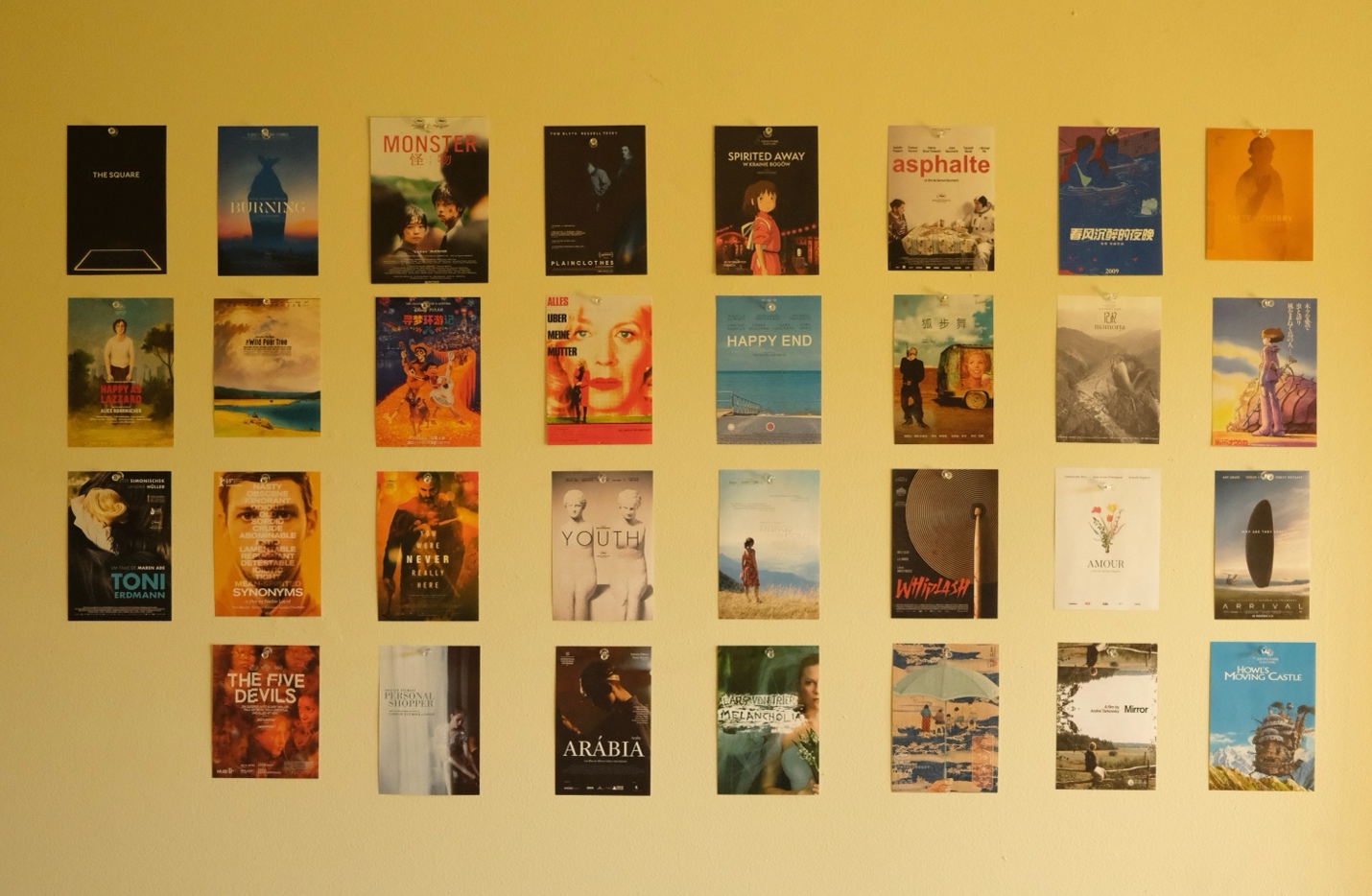
As ramshackle as my fortress of self-grandeur and insecurity was, and as radical as my solution of “Americanization” was, I deemed them necessary to get me through my teenage years and my 20s. This fortress shielded me through my teenage years, and I spent my early 20s trying to dismantle it—to rid myself of the imagined reality—that I do not care, and I am superior— which I had concocted out of the desperate belief that I would never find joy or peace otherwise, a disembodied experience I can only approximate through the 2016 film Personal Shopper.
Like the protagonist in the 2019 film Synonyms, Yoav distanced himself from the culture he grew up in by obsessively mastering French. Fortunately for me, the people I met led me toward a pleasant direction.
The tumult of my early 20s is beginning to settle. I am in love with a man with whom I can safely express our shared femininity and critique esoteric or popular media. Two years ago, he could already make Lu Xun jokes. Once, I asked him, would we have fallen in love if my English hadn’t been as good? He said no; neither of us can imagine being intimate without the ability to be cynical together or make niche cultural jokes.
This is the ironic turn: I fell in love in English, dream in English; only then did I begin to make my way back to being Chinese—to learn how to love my family and to delineate and comprehend my relationship with Chinese culture.
If I were to confront and succumb to the guilt of having put my family through such distress or the honest belief that I am a mediocre kid using vanity as a self-deceiving tool to keep me motivated academically, I might never have mustered the resolve to bring myself to actualize what I believed was a better future in a foreign land. This is not a point of humility, but a realization about the existence of deflection veiled as hubris from what it truly means to care for and exist with others, an emotion well characterized in the 2018 film The Wild Pear Tree.
I am neither saddened that I barely dream in Chinese, nor pleased that I dream only in English. These two states, however equivalent they may seem, are separated by a line stretching over the past twenty years of my life. It did take me no longer dreaming in Chinese to find my way back to my Chinese identity with self-assurance.
I would call it unfortunate.
But that is a statement I would not have dared to make before emerging from the tunnel of self-deceit and self-censorship—pursued in the name of personal achievement and contentment, and at the expense of others and myself.